Read primary sources
Regulatory filings, court records, academic papers, and public data portals.
The sources a research agent needs were not built for agents. Browserbase gives deep research agents a full browser stack so they can read primary sources, log into gated portals, and run hundreds of research threads in parallel, under one API key. Running on infrastructure that handles 35m+ browser sessions a month.
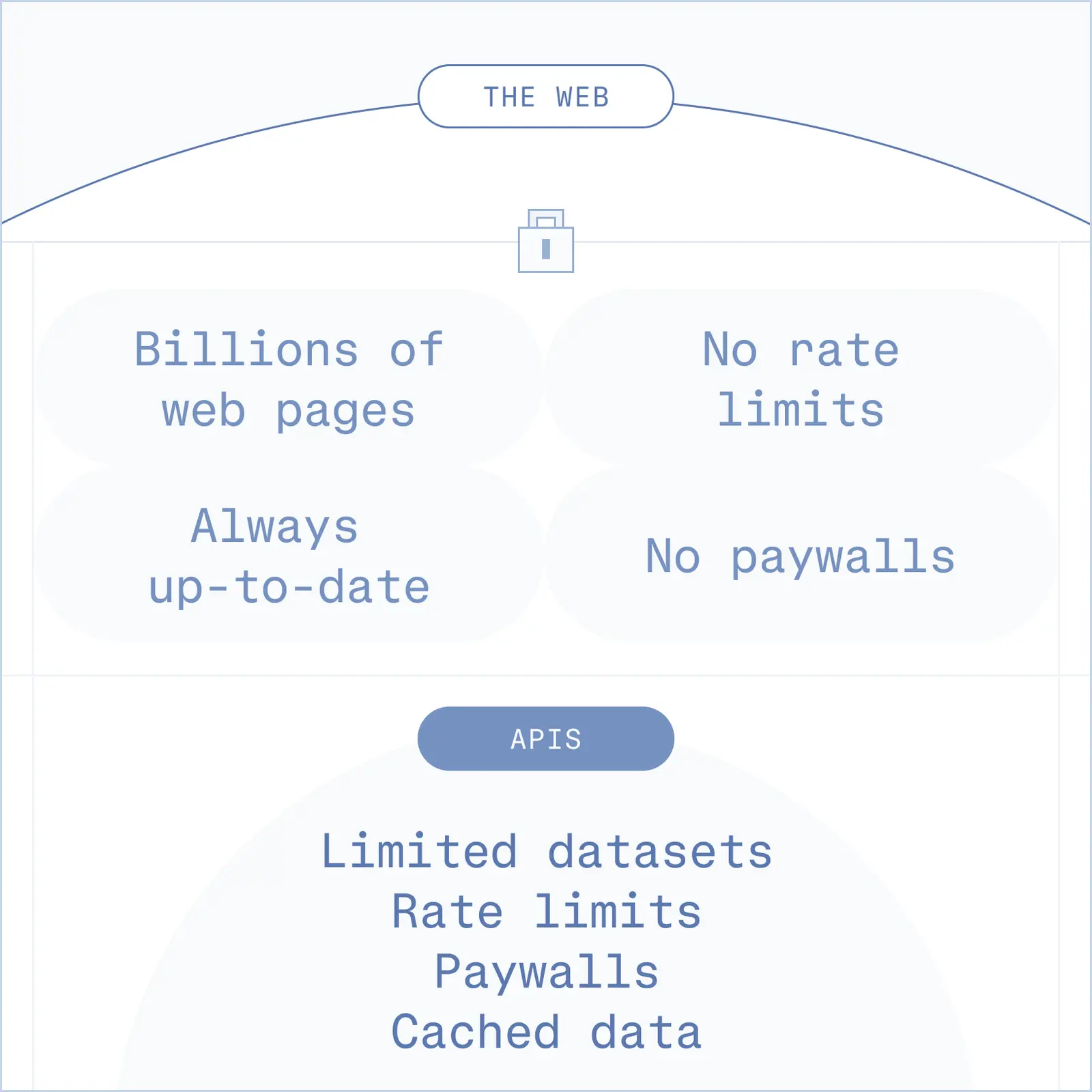
The Problem

The Solution
Regulatory filings, court records, academic papers, and public data portals.
Subscriber articles, research databases, and authenticated dashboards.
Hundreds of concurrent browsers turn hour-long research into minutes.
Full page text, screenshots, and source URLs feed straight into your agent.
AI deep research is a workflow where an autonomous agent breaks a question into subtopics, browses many sources on the open web, reads and reasons over each one, and returns a synthesized report with citations. It goes further than a single search or a chat answer because the agent visits real pages and follows leads across the web.
Browserbase gives research agents a cloud browser they can control programmatically. That means the agent can render JavaScript-heavy pages, log into gated sites, clear CAPTCHAs, rotate IPs, and pull down the full text of a source rather than a scraped snippet. It also lets one workflow spin up many browsers in parallel, so an agent can research dozens of angles at once.
Yes, with permission. Browserbase supports persistent sessions, so an agent can log in once with your credentials and keep that session across future research runs. That opens up subscriber news sites, research databases, and internal portals that public scrapers cannot reach.
APIs only cover the small share of the web that publishers choose to expose, and they rarely include the source detail a research agent needs. A browser gives the agent access to the same content a human researcher would see, including tables, footnotes, and linked citations that never appear in an API response.
You can connect any browser automation framework, including Stagehand®, Playwright, Puppeteer, and Selenium. Agent frameworks like the OpenAI Agents SDK, LangChain, and CrewAI plug into a Browserbase session over CDP, so the agent can act like a browser user while your framework handles planning and reasoning.